tamaranth: me, in the sun (Default)
tamaranth ([personal profile] tamaranth) wrote2025-12-03 01:13 pm
Entry tags:

2025/191: The Future Starts Here — John Higgs

2025/191: The Future Starts Here — John Higgs
The real problem is that a species that lives inside its own fictions can no longer imagine a healthy fiction to live inside, and this failure of the imagination stops us from steering towards the better versions of our potential futures. [p. 19]

The Future Starts Here: An Optimistic Guide to What Comes Next is a cultural analysis of how we view the future, focussing very much on the positive. The book ranges from an overview of why colonising Mars is a daft idea to explorations of the Knebb rewilding project, of natural versus artificial intelligence (and why Higgs feels his cat is smarter than Alexa), and of the ways in which virtual reality can be more than just entertainment. Read more... )

tamaranth: me, in the sun (Default)
tamaranth ([personal profile] tamaranth) wrote2025-12-01 12:27 pm
Entry tags:

2025/190: Yvgenie — C J Cherryh

2025/190: Yvgenie — C J Cherryh
... wizards he knew about sold curses and told fortunes. They did not crawl about inside one's heart and talk from other people's mouths and compel them... [loc. 2560]

Reread: I first read this in the 1990s, I think, and recall liking it: this was before I reviewed everything I read, so I don't know what I thought about it then. This time around, without having reread the two preceding novels of the 'Rusalka' trilogy, I was confused and unengaged.

Read more... )
tamaranth: me, in the sun (Default)
tamaranth ([personal profile] tamaranth) wrote2025-11-27 07:33 am
Entry tags:

2025/189: Breed to Come — Andre Norton

2025/189: Breed to Come — Andre Norton
There had always been Puttis -- round and soft, made for children. She had kept hers because it was the last thing her mother had made... Puttis were four-legged and tailed. Their heads were round, with shining eyes made of buttons or beads, upstanding ears, whiskers above the small mouth. Puttis were loved, played with, adored in the child world; their origin was those brought by children on the First Ships. [loc. 2219]

This was the first science fiction book I remember reading, from Rochford Library, probably pre-1975. I don't think I've read it since, though I did briefly own a paperback copy. Apparently the blurbs of newer editions mention 'university complex' and 'epidemic virus': aged <10, I was hooked by the cat on the front.

Read more... )
tamaranth: me, in the sun (Default)
tamaranth ([personal profile] tamaranth) wrote2025-11-25 05:19 pm
Entry tags:

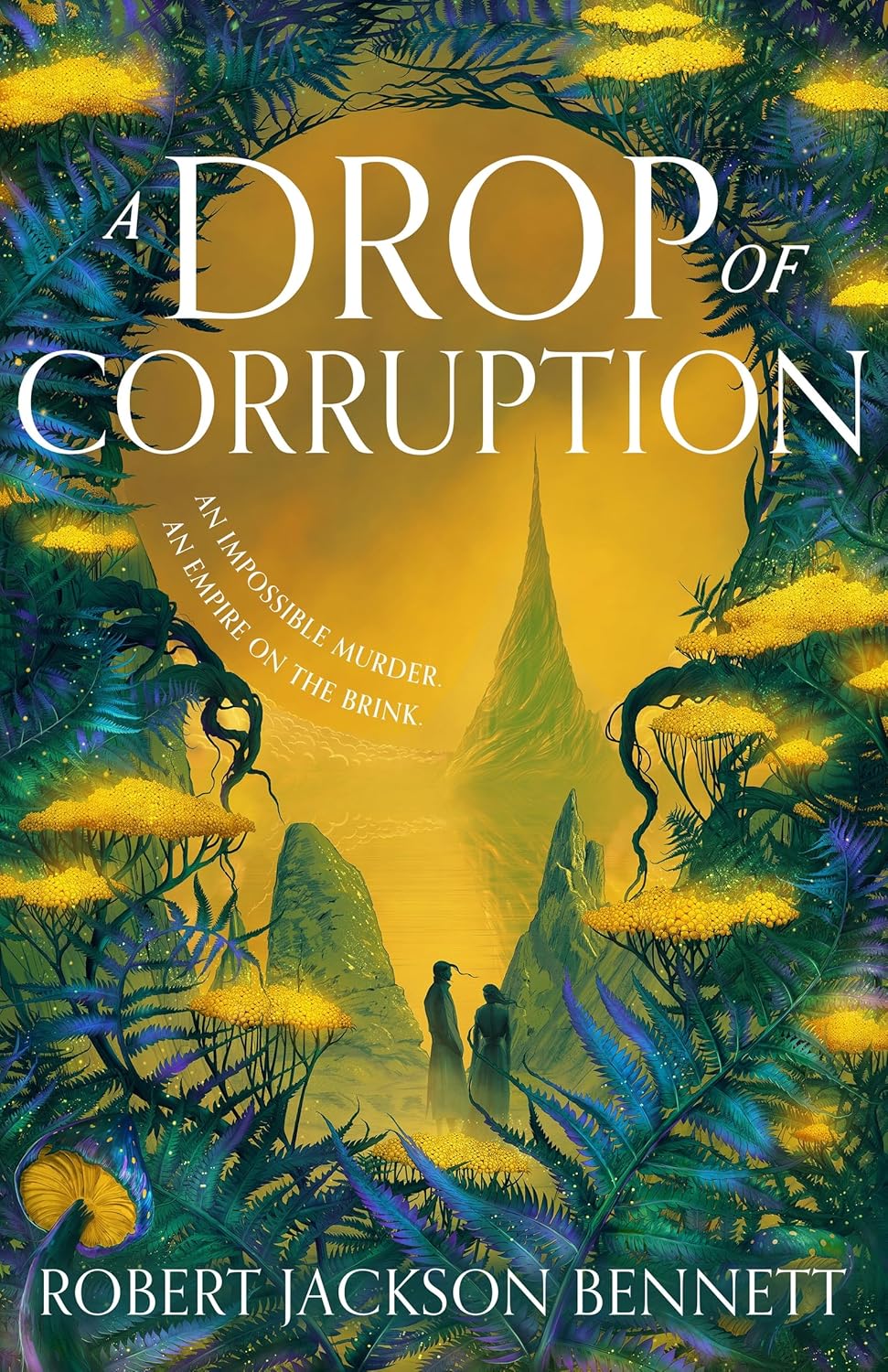
2025/188: A Drop of Corruption — Robert Jackson Bennett

2025/188: A Drop of Corruption — Robert Jackson Bennett
“... they began to exhibit afflictions.”
“Apophenia being the worst, and most notable,” said Ghrelin. “An uncontrollable, debilitating impulse to spy patterns in everything.”
I glanced at Ana, but she only smiled and wryly said, “Oh, I’m familiar with that one..." [loc. 3361]

Sequel to The Tainted Cup, and second in Bennett's 'Shadow of the Leviathan' trilogy. While this didn't wow me quite as much as the first book -- which was so utterly novel in setting and ambience -- it's still a marvellous read. Bennett continues to explore the Empire of Khanum, in this case by venturing outside it. Read more... )

tamaranth: me, in the sun (Default)
tamaranth ([personal profile] tamaranth) wrote2025-11-24 08:01 pm
Entry tags:

2025/187: The Fall of Troy — Peter Ackroyd

2025/187: The Fall of Troy — Peter Ackroyd
There are many Turks who believe that the capture of Constantinople was a just vengeance for the fall of Troy. The Greeks were at last made to pay for their perfidy. [loc. 2376]

Reread: my review from 2010 is here. I remembered nothing at all about this novel! Apparently I purchased a paperback copy in 2007: as with almost all of his other novels, no Kindle edition is available.

Ackroyd bases his novel on the life of Heinrich Schliemann, who first excavated Troy, and his marriage to a much younger woman, a Greek (famously chosen on the basis of a photograph and 'Homeric spirit'). Ackroyd's fictional archaeologist is named Heinrich Obermann, and he has all of Schliemann's flaws and more:Read more... )